Back in 2017, my family and I watched the movie Mudbound, one of the first “straight-to-Netflix” films. It caught my attention like few movies to that point had. The plot line – at its most basic level – was that two young men from Mississippi went to serve in World War II. One was white. The other was black. Both served with an impressive degree of courage and patriotism.
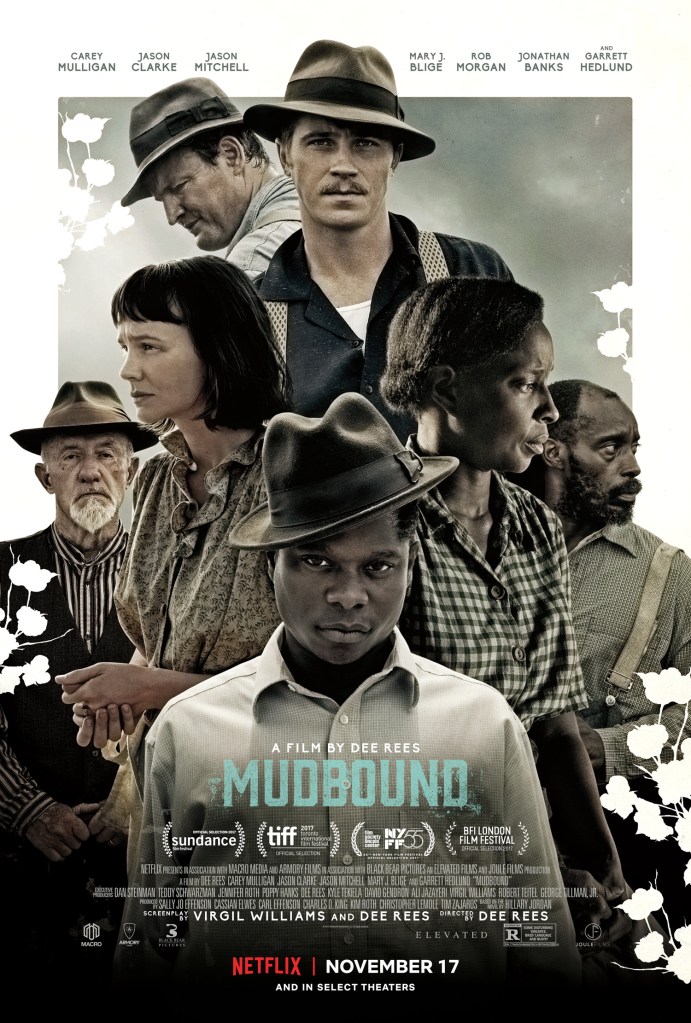
But when they returned home, they were treated differently. This disparity was perhaps most clearly seen in relation to the GI Bill. One – the white guy – had easy access to that help with education. The other – the black guy – had basically no access to that program for soldiers returning from the war (a common occurrence, as explained here).
You don’t need to be too bright to realize that a poor, white guy from Mississippi with access to the GI Bill has significant advantage over a poor, black guy from Mississippi who has practically no access to higher education.
I know some white people who chose not to take advantage of the GI Bill. That’s fine. But it was, for the most part, their choice. I’m confident I know some black people who had no such option.
Mudbound is an important story if we want to come to a reasonable understanding of all the current tension in our culture. Should the color of my skin matter if, like my white friends, I served in the military to defeat the evil forces of Hitler, Japan, and all the associated enemies who followed them? If I am an 18-year-old college student today, wondering about the tension in our culture, all of that may seem like ancient history. But it has a lot to do with the present circumstances that include protests, violence, and, unfortunately, criminal behavior.
As I watch a Wendy’s burn down on University Avenue in Atlanta, I wonder what I might do if I were black, and my grandfather had been denied access to a college education after valiant service in WWII simply because his skin tone was too dark. I hope I would say, “I know we haven’t been treated with justice, but burning down a building won’t change that.” But the possibility remains that I might say, “What do I have to lose? Generation after generation since the Civil War and Emancipation Proclamation has been treated as second-class citizens at best, less than human at worst.”
In some ways, I have had the blessing of a privileged upbringing. I grew up in the Jim Crow South, but my parents didn’t let their children use insulting language when talking about people of another race. When my high school integrated – both teachers and students – my parents didn’t rush me off to a segregation academy like lots of people I know did. My parents weren’t rich, by any means. But every Christmas, they made sure that the black children whose parents had some connection to our family farm – children with whom I sometimes played – enjoyed a toy or two from our family on Christmas morning.
During the Civil Rights tension of the mid-1960s, I remember hearing my grandfather, a typical white, Southern farmer, say, “If Woolworth’s wants to sell a black person a spool of thread, they should be willing to sell them a hamburger at the lunch counter.” I remember my mother’s consternation when we walked up to a Hardee’s (long before fast-food restaurants offered indoor dining) and saw the manager refuse to sell a young black couple with a baby a 15-cent hamburger on a cold, rainy Christmas Eve night – in the name of “we reserve the right to refuse service to anyone.”
Here we are in 2020, and it seems like every week, there is a story of police officers exercising deadly force on people of color when it really isn’t necessary. The population of state and federal prisons is so out of balance that one can’t help but wonder, “Where is justice in the midst of all of this?” The rate of recidivism in state prisons in Georgia would suggest that as long as we can “lock people up,” we could not care less about their future. Truthfully, this is a problem that crosses lots of racial and ethnic barriers. The ability of district attorneys to threaten people with horrific sentences if they don’t plead out is a curse on our system that must be fixed – for all of us!
I know that not all law enforcement officers are racists waiting on an opportunity to abuse or kill a person of a different race. But I also know that those who aren’t must develop the courage to say to those who are, “That’s it. No more.” There is a lot of power in wearing a badge – and power is one of the most easily corrupted realities in all of humanity. We must figure that out. Some of what I’ve read on social media in the past few weeks, posted by “wannabe cops,” is nauseating – and so far removed from the Christian gospel that it stuns me to think a person who claims to know Jesus would say it.
I also recognize that not all people of color are comfortable with some of what is currently going on. The people most impacted by the burning down of the Wendy’s on University Avenue this past weekend are not the corporate rich folks who own Wendy’s. Rather, those most affected will be members of the largely black surrounding community, for whom Wendy’s was a reasonable option for lunch. This is just a guess on my part, but it is at least possible that the people who started the fire weren’t actually protesting Rayshard Brooks’ death. Those not comfortable with this kind of violence must be willing to speak up – just like the “good cops” need to speak up.
I want to continue to strive to be the kind of person who recognizes that what Paul said in Galatians 3 is actually true – “for those who have been baptized into Christ, we are ONE, there is neither Jew nor Greek, male nor female, slave nor free.”
Despite having been raised by parents who weren’t racists, I won’t dare suggest that I always get it right myself. I believe that my motives are always good, but as the old saying goes, sometimes “the road to hell is paved with good intentions.” I want to continue to strive to be the kind of person who recognizes that what Paul said in Galatians 3 is actually true – “for those who have been baptized into Christ, we are ONE, there is neither Jew nor Greek, male nor female, slave nor free.” And that doesn’t mean “one” in the sense that there is one paradigm for a follower of Jesus and it looks an awful lot like a white male; it means “one” in a way that refers to unity, moving beyond being identical in terms of group, gender, and geography.
As a person who has privilege of some degree because of skin color, I want to commit myself to never take unfair advantage of that privilege. On Ash Wednesday of this year, students, faculty and staff at Point were invited to place a Post-It note on a cross stating a Lenten commitment. Mine said, “I want to be more vocal about justice that I ever have been.”
That means I have to acknowledge that in our current culture, I am more likely to get a warning and not a speeding ticket – though I’ve certainly had a few tickets! I can buy a house in any neighborhood I can afford, without discrimination. I don’t get stared at when eating at the local “meat and two vegetables” diner. When I walk into Target, I never feel like I’m being watched in case I shoplift. I didn’t have a son, but had one of my children been male, I wouldn’t have felt the need to warn him about all kinds of stuff a black parent needs to warn his or her son about. For those who don’t have that privilege, I want to be a person who works to make life more fair and just.
For years, I have been trying to figure out how I, as a college professor, should deal with the fact that just because I had the privilege of growing up in a home that valued reading, that doesn’t mean everyone else did. One side of my brain insists that reading is essential to education and learning and getting ahead. But the other side of my head wonders, “How can a person who grew up in a home with few or no books, learn to appreciate reading?” Similarly, we all need to think about how our privileges – conscious or unconscious – change the way we view the world.
Of all the things I think I know at the moment, perhaps at the top of the list is the simple fact that sin has inflicted the world with great pain – often born of injustice. Jesus came to ease that pain and invite us to be His partners in renewing and restoring creation to its God-intended purpose. I see no injustice in Genesis 2, but after Genesis 3, injustice seems to become the human story.
Jesus is God’s answer to that problem. Let’s sit around a table and have a conversation about Him.
 Wye Huxford